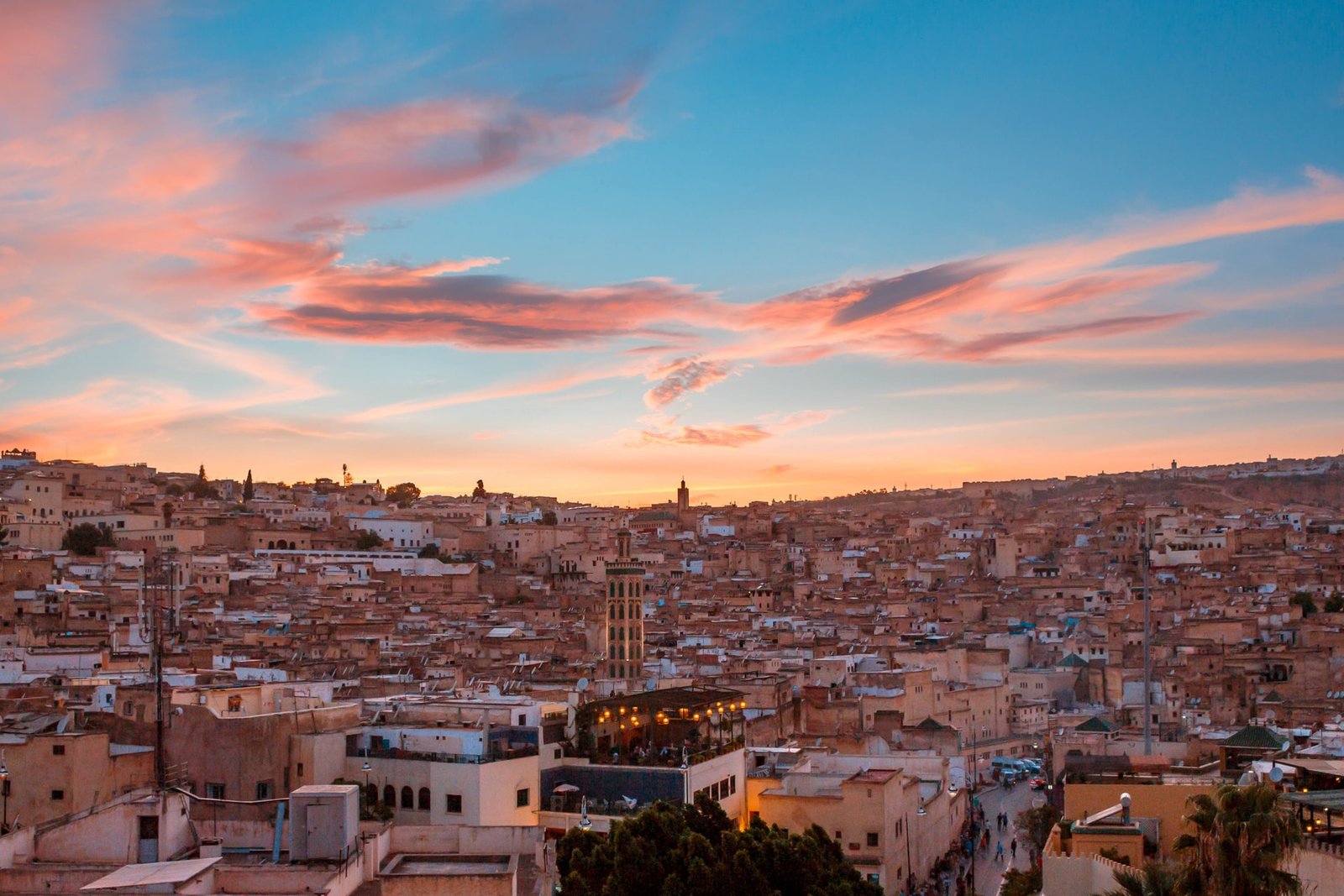
Fez is the oldest of the imperial cities and the one that has changed the least. Fes el Bali, its walled medina, is a UNESCO World Heritage site and one of the largest car free urban areas on earth: nine thousand lanes, and mules still doing the work that vans do elsewhere.
It is also where the intellectual life of Morocco was built. Al Qarawiyyin was founded here in 859 by Fatima al Fihri and is recognised as the oldest continuously operating university in the world. The city has never traded on nostalgia for that; the workshops, the tanneries and the schools are all still running.
Fez rewards slowness. These are the anchors, but the medina between them is the point.
A walled medieval city that works: no cars, thousands of lanes, and trades grouped by quarter. It is genuinely disorienting, which is why we walk it with a local guide.
The oldest university in the world, and the medersas around it, Bou Inania and Attarine, where the carved plaster and cedar are the reason to go in.
The Chouara tanneries have been dyeing leather in stone vats since the eleventh century, and you look down on them from the terraces of the leather shops. Also brass, zellige tile and the blue pottery of Fez.
The blue gate is the usual way in, and the walls, the Merinid tombs and the Borj Nord above them give you the only view that makes sense of the city's size.
An hour away: the imperial city of Meknes and the Roman ruins of Volubilis, where the mosaics are still in the floors they were laid in.
Message us with your dates and group: you will have a detailed private itinerary and one clear price within a day.
