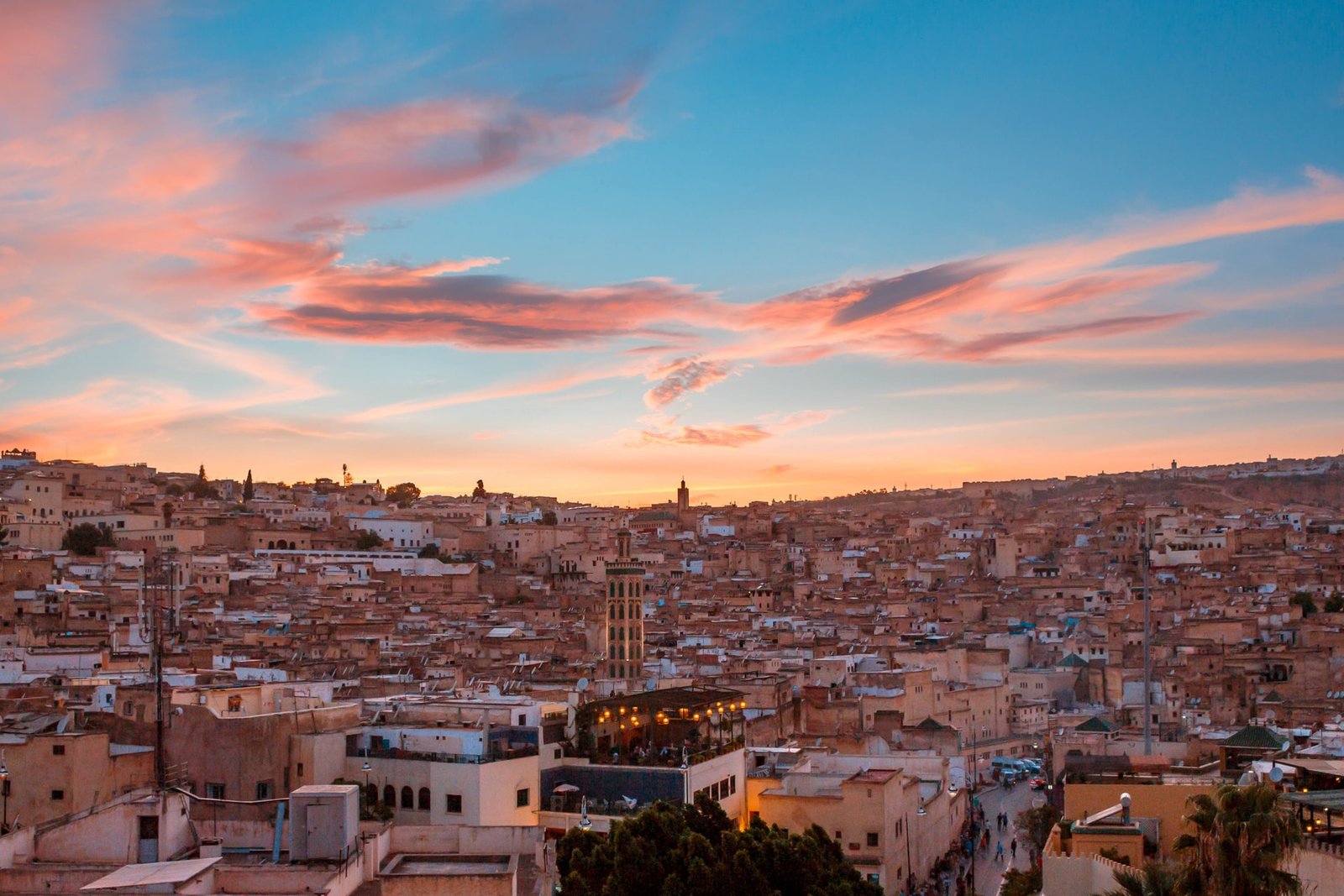
Marrakech was founded in 1070 as a camp on the caravan road, and it has never really stopped being a crossroads. The Almoravids walled it, the Almohads gave it the Koutoubia, the Saadians left their tombs, and the French built a new town beside the old one rather than over it. The result is a city that reads in layers, and where the layers are all still in use.
It is also the practical answer for a first trip to Morocco. The medina is a UNESCO World Heritage site, the airport is fifteen minutes away, and within three hours of driving you can be in the High Atlas, in a stone desert, or on the Atlantic. That is why we are based here and why most of our routes begin here.
A first reading of the city, from the founding monuments to what happens after dark. Every one of these can be a half day or a full one.
A walled city of narrow lanes where trades are still grouped by street: dyers, coppersmiths, leather, spices. Getting lost is part of it, and it is smaller than it feels.
The twelfth century minaret that set the pattern for Seville and Rabat, the painted cedar ceilings of the Bahia palace, and the Saadian tombs, walled up for three centuries and reopened in 1917.
Marrakech is a city of irrigated gardens fed by the khettara water channels. Majorelle for the blue and the cactus, the Menara for its pavilion and olive grove, the Agdal for its scale.
The square empties and refills every day: orange juice carts, then food stalls, then musicians and storytellers. UNESCO lists it as intangible heritage, which is a rare thing for a square.
Tagine and couscous on Fridays, but also the tanjia that men cook in the ashes of the hammam furnace, and street food that is at its best after dark.
Message us with your dates and group: you will have a detailed private itinerary and one clear price within a day.
